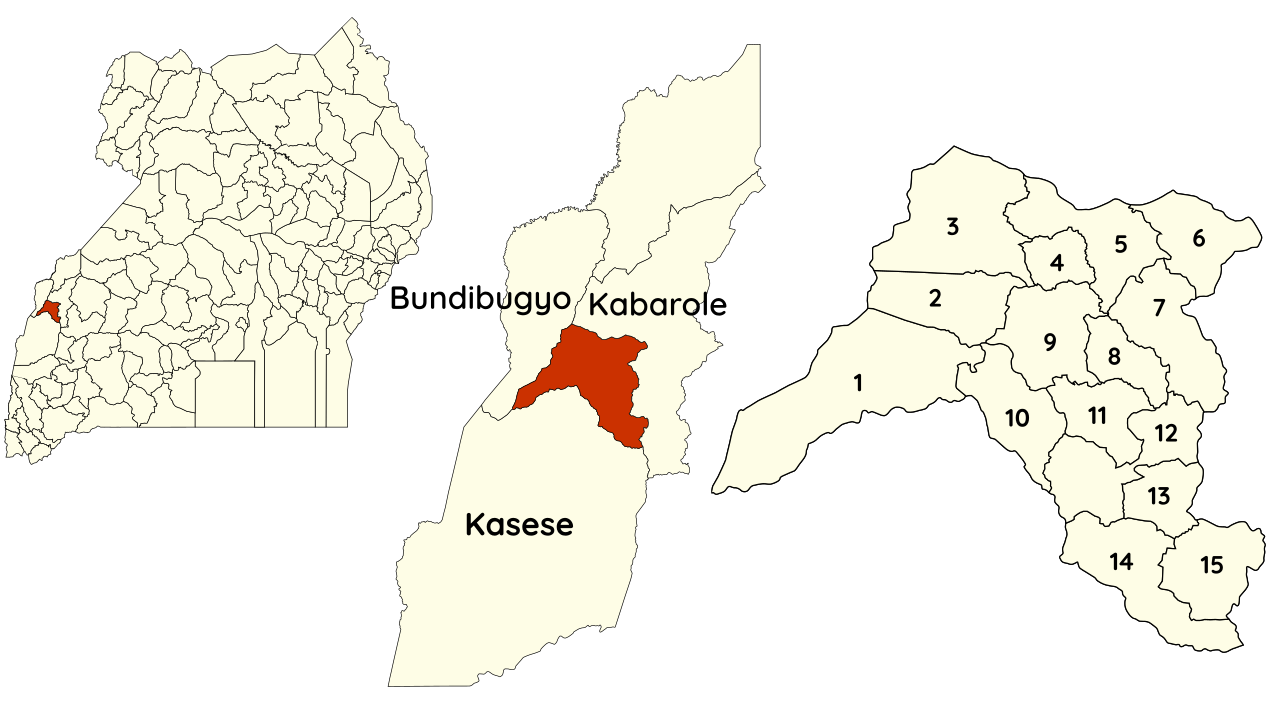
Understanding Bunyangabu District: Key Data and Information
District Profile & Facts
Bunyangabu District is one of the vibrant districts located in Western Region of Uganda. It holds significant [mention a key characteristic, e.g., agricultural, cultural, historical] importance within the country. This section provides a snapshot of key geographical, demographic, and socio-economic facts about our district.
Date of Establishment: 1 July 2017
Location: Bunyangabu is bordered by Kabarole District to the north, Kamwenge District to the east, Kasese District to the south and Bundibugyo District to the west. The town of Kibiito, where the district headquarters are located, is approximately 33 kilometres (21 mi), by road, southwest of Fort Portal, the largest city in Toro sub-region. This is approximately 330 kilometres (205 mi), by road, west of Kampala, the capital and largest city of Uganda.
[Brief description of geographical location, e.g., "Located approximately X km from Kampala, bordering Y, Z, and W districts." Mention specific coordinates or regions if known.]
Area: Approximately 496.5 square kilometers.
Population: 219,012 (based on 2024 projections)
Demographics: 112,678 (51%) males, 106,334 (48.6%) Females [Briefly mention ethnic groups, age distribution, e.g., "Diverse ethnic groups, with a youthful population."]
Administrative Units: Comprises 8 sub-counties,7 town Councils , 57 parishes/wards, and 392 villages/cells.
No
Sub-county/ Town Council
No. of Parishes/Wards
No. of Villages/Cells
1
Buheesi SC
4
18
2
Kiyombya SC
5
33
3
Buheesi TC
2
29
4
Katebwa SC
4
18
5
Rwimi TC
4
19
6
Kibiito SC
3
25
7
Rwimi SC
4
27
8
Kibiito TC
5
21
9
Kisomoro SC
4
44
10
Kyamukube TC
4
49
11
Kabonero SC
3
32
12
Rubona TC
3
15
13
Bukara SC
3
12
14
Nyakigumba TC
4
33
15
Kakinga TC
5
17
Total
57
392
Economic Activities: The economy of Bunyangabu is predominantly agrarian, with subsistence agriculture serving as the main economic activity, employing a significant 90% of the population. Key food and cash crops cultivated include coffee, maize, rice, matooke, Irish potatoes, beans, sweet potatoes, cassava, and various vegetables such as tomatoes and greens.
Beyond crop farming, livestock farming is also prominent, with residents engaging in dairy farming, goat rearing, piggery, and commercial poultry.
Small-scale trade forms another vital source of livelihood, with both men and women in rural and urban areas deriving income from selling foodstuffs, new and used clothing, charcoal, and firewood in local markets.
The district also benefits from other diverse economic activities, including tourism, agro-forestry, and significant public service investments in the education and health sectors, which provide employment and stimulate local economies. Additionally, the transport sector offers employment opportunities, particularly for young people involved in operating boda-bodas (motorcycle taxis) and commuter taxis.
Key Natural Resources:
Arable Land: The district possesses fertile agricultural land, which is the cornerstone of its economy, supporting extensive subsistence farming of various crops like coffee, maize, and matooke
Water Resources: Bunyangabu is characterized by an intricate network of rivers, including Yerya and Ntabago, which are vital for domestic use, agriculture, and potential fishing activities.The district also has numerous crater lakes such as Ntambi, Kanyamukale, Ntanda, and Mwegenya, adding to its water bodies and scenic beauty.
Wetlands: Like many parts of Uganda, Bunyangabu has wetland ecosystems which are important for biodiversity, water purification, and supporting various local livelihoods, though they face pressure from human activities.
Forestry Resources: The district has natural forests and promotes agroforestry, contributing to timber, charcoal, and other non-timber forest products. However, these resources face challenges from deforestation due to high demand.
Mineral Resources: There are mentions of minor mineral deposits, with sand and gold being among the minerals reportedly mined in the district.
Unique Geological Features: The presence of Rwagimba Hot Springs in Bukara Sub County is a notable natural wonder, famed for its therapeutic properties and as a tourist attraction, highlighting the district's geological richness.
Scenic Landscapes: Bunyangabu boasts rolling hills, valleys, and lush vegetation, which create a dramatic and beautiful landscape, offering potential for eco-tourism and nature-based activities
Infrastructure Highlights: [Mention key infrastructure, e.g., "Developing road network, increasing access to safe water, growing number of health centers and schools."]
Challenges & Opportunities: [Briefly mention 1-2 major challenges (e.g., youth unemployment, climate change impact) and 1-2 major opportunities (e.g., tourism potential, investment in agro-processing).] Crater Lakes Ntambi Kanyamukale, Ntanda and Mwegenya
We are professional and reliable provider since we offer customers the most powerful and beautiful themes. Besides, we always catch the latest technology and adapt to follow world’s new trends to deliver the best themes to the market.
Contact info
We are the leaders in the building industries and factories. We're word wide. We never give up on the challenges.